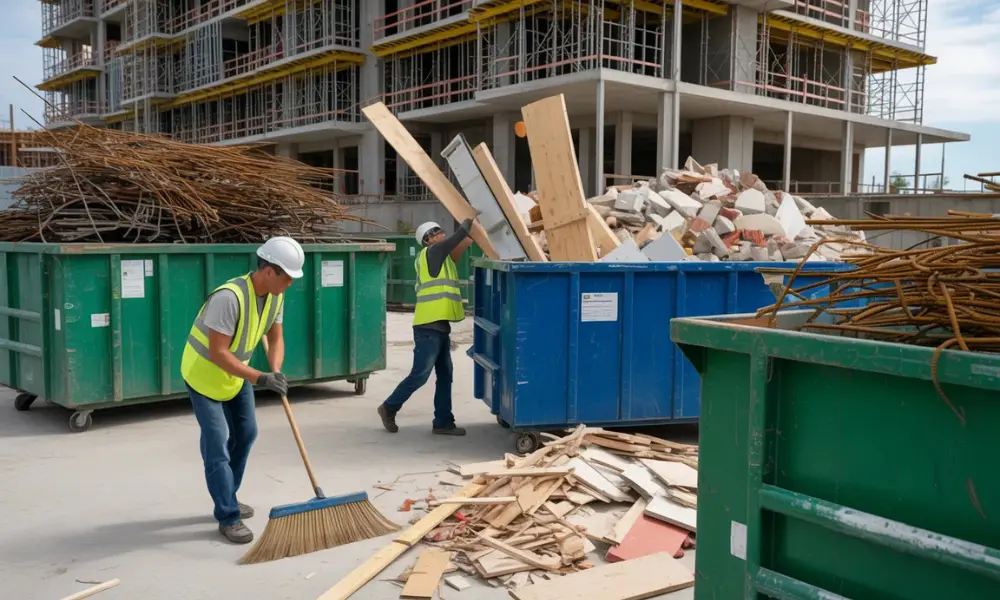

Busy construction jobsites are in a state of constant flux. Materials arrive and are moved through the work area, and trash is generated as demolition, rough framing and finishing work is done. In this environment, garbage disposal is not only about cleaning up, but also about logistics, which affect the process of safety and efficiency.
Construction managers’ garbage disposal is important to keep the construction work sites running during the process of construction.
Construction Waste is Ongoing
Continuous debris is one of the distinguishing factors of construction. New components are being added at every step of the process, hence, producing wastes. The wastes can be in the form of scrap wood from framing, off-cuts from roofing, and so on; other items such as packaging, drywall and trims from finishing work.
ensure that these wastes do not interfere with any work, it’s important that they are managed on-site.
This is because wastes must be disposed of properly in order to ensure that construction works flow seamlessly.
Unmanaged Waste Poses Various Safety Hazards
Unfixed items can cause a number of hazards on an active construction site. The availability of loose material such as nails and sharp edges would lead to slips. Also, off-limits areas would not allow appropriate reaction in case of any emergency.
These hazards can be prevented by disposing the waste properly and therefore, people will navigate safely around the workplace. Appropriate waste disposal will also help easy movement of staff around the workplace. Construction safety inspectors and site supervisors usually take the aspect of waste disposal into consideration during safety inspections.
Efficient Workflows Parameters
Construction is much dependent on co-ordination of various work trades. The works of electricians, plumbers, carpenters and finishers will mainly be carried out in the same area.
Given the amount of waste material generated from these jobs, there will be a lot of clutter at the jobsite and moving things around will be difficult.
This is how it helps the move from one stage to another to be as seamless as possible.
Protecting Materials and Equipment
Construction sites often have some expensive tools and equipment that are yet to be installed. Waste is an unsightly nuisance that is likely to damage valuable equipment and tools, and lose some stock.
Debris management is made easier for the workers and final products are not damaged by debris. This creates a good environment that provides access to tools and equipment.
Having an organized construction site, therefore, becomes important during later phases of construction.
This is the case when waste removal is linked to the stages of the project
Construction work is typically broken down into different phases which produce different types of waste. Heavy waste is generated during the demolition phase while light packaging waste is generated during the finishing phase.
Construction managers often align the waste disposal process with these phases, where the need for waste disposal is in line with the availability of waste.
This method helps avoid bottlenecks, while avoiding excess equipment on site in slow periods.
Proper co-ordination ensures disposal is in line with the project schedule.
Working With Waste Service Providers
Waste disposal is a co-ordinated effort between the on-site staff and the waste providers. Collaboration should be in terms of delivery, placement and collection of the waste.
The contractors may work with the local authorities as well as with companies such as Waste Removal USA to remove waste during construction. Timely scheduling in such situations will be one of the key aspects.
Keeping the Job Site in Good Order
Besides being essential to the safety and efficiency of the project, the waste management will affect the image of the project. There are frequent visits by the clients and inspectors to the projects being constructed, and a clean job site always reflects good project management.
But improper waste management might be an indicator of poor project management even though the project is being constructed properly. Keeping the construction site clean shows the commitment for a professional attitude towards work.
A successful construction project management plan should involve proper waste disposal, which would help improve the work efficiency in the construction project.
Hence, if waste disposal is part of the work, the construction site is kept clean to ensure the work can be done efficiently from the start of the project (demolition) until the completion of the project (construction).