Hi Guys,Over the past years, the debate about sustainability has been growing stronger because of the necessity to fight climate change and conserve natural resources, emphasizing the role of artificial intelligence in addressing these complex problems across industries, particularly through the use of virtual assistants such as chatgpt.
Among the other innovations that contribute to this cause, one can single out artificial intelligence (AI), which is a disruptive technology that can positively influence sustainable living practices through a range of applications and large language deep learning techniques, including those exemplified by chatgpt.
This article will discuss how artificial intelligence has the potential to help in the sustainability of various industries, including energy management, waste reduction, and the algorithmic applications of AI, while also highlighting the positive impacts on the environment and technologies
Contribution of Artificial Intelligence
Knowing About Sustainable Living
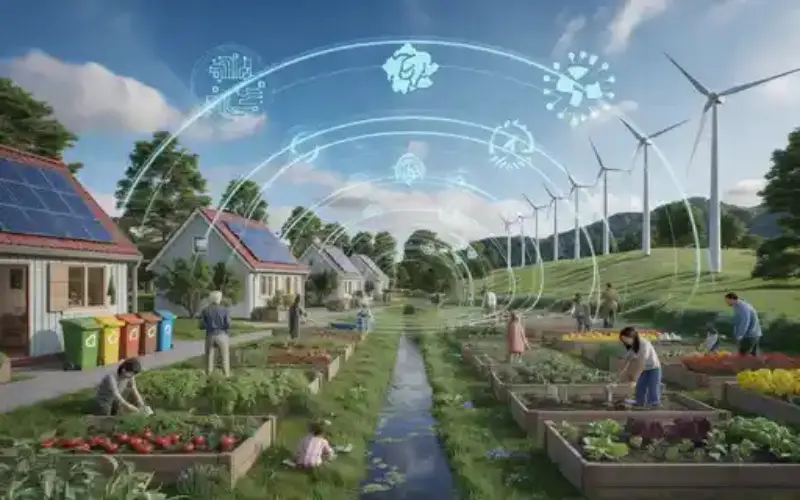
Sustainable living is a style of living that aims to reduce consumption of natural resources available on the earth by an individual or the society in addition to enhancing environmental well-being and social justice. It involves a number of practices such as lessening waste, saving energy, and backing local economies, all of which can be optimized with AI systems that analyze massive amounts of data, showcasing the impact of AI development on the world, as seen in applications like chatgpt.
Since, the global population ever increasing, there is a more complicated task of ensuring sustainable living, highlighting the ethical considerations we must address in the use of emerging technologies like AI, particularly in relation to personal data, as Alan Turing would have advocated for thoughtful AI development.
Here is where AI enters, offering new ideas to make us lead a more sustainable life through AI-powered solutions and the potential of AI to revolutionize our approach to environmental challenges and patient care in the healthcare industry, reflecting the vision of pioneers like Alan Turing.
Therefore, Knowing about sustainable living is essential for making informed decisions that contribute to a healthier planet with the help of AI systems, including advancements in AI in education, and AI can also be used to promote sustainable practices through the use of virtual assistants like chatgpt.
AI in Energy Management
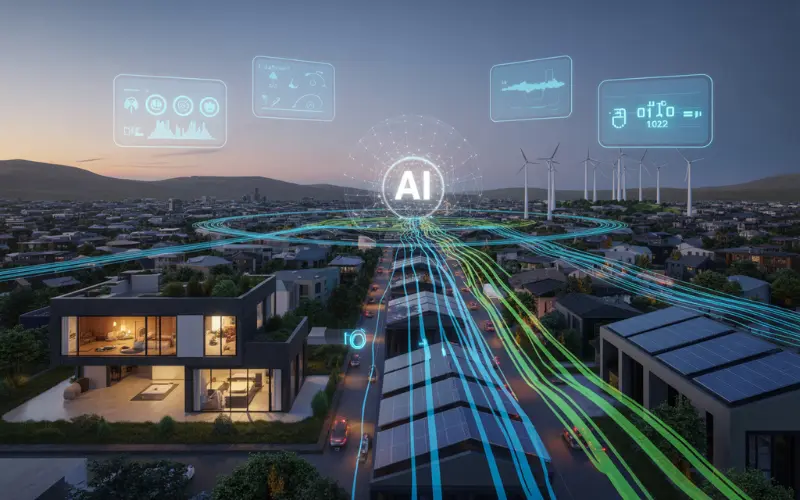
AI in Energy Management is a prime example of how artificial intelligence is making the world more efficient and helping to solve complex problems related to energy consumption, showcasing how AI has become a vital tool in this sector.
Energy management is the most significant uses of AI in ensuring sustainable living is the use of AI products in energy management, which can optimize resource allocation across industries, reflecting the positive impacts on the world and helping to solve pressing environmental problems.
Artificial intelligence technologies can maximize residential, commercial, and urban energy usage, leveraging big data and natural language processing to optimize resource allocation, thereby demonstrating the positive impacts of AI on sustainability, including advancements seen in tools like chatgpt.
As an example, AI-based smart grids are able to detect both demand and supply of energy, which allows the future distribution of electricity to be more efficient, showcasing how AI is transforming energy management through vast amounts of data.
Such systems have the ability to analyze data that is obtained in several forms, such as weather conditions and previous patterns of consumption, to reduce wastage of energy through generative AI techniques and vast amounts of data analysis, illustrating how AI is already making strides in sustainability.
In addition, AI-powered home automation solutions enable users to track and manage their energy use in real time, promoting sustainable living through vast amounts of data analytics and personalized learning experiences, much like the innovations envisioned by Alan Turing.
Smart lighting systems and thermostats can learn user preferences and automatically control the settings without human intervention, demonstrating the ability of AI to save on unnecessary use of energy. With the introduction of AI in energy management, one can drastically reduce his/her carbon footprint as well as reduce utility bills, making the world a better place while utilizing the future of AI to help solve complex problems.
Enhancing Transportation
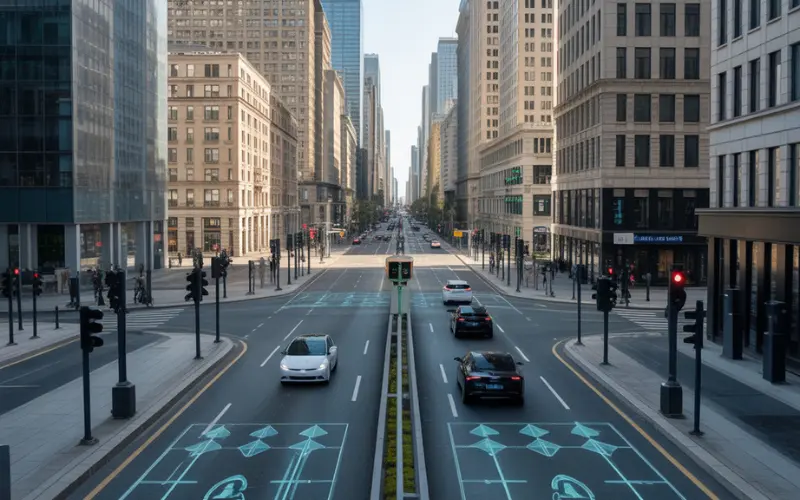
Enhancing Transportation with AI applications can lead to a reduction in emissions and improved efficiency, showcasing the learning experiences that come from implementing self-driving cars and AI solutions.Therefore, transportation is a major area that AI can support sustainable living.
AI is changing how we plan and utilize our resources, as highlighted by the World Economic Forum, and demonstrating the potential of AI in optimizing transit systems. The transportation industry is a significant source of greenhouse emissions, and AI can be used to reduce this effect, highlighting the ways artificial intelligence can create a cleaner environment by solving complex challenges.
The AI algorithms have an opportunity to streamline traffic in the cities, decrease congestion, and detect pollution levels, contributing to a cleaner environment and demonstrating the benefits of artificial intelligence. As an illustration, smart traffic lights will be able to change their timings according to the real-time traffic conditions to ensure that traffic flows smoothly and vehicles do not spend much time in traffic.
Moreover, AI is making a significant impact in the technology of self-driving vehicles that will make the process of travelling a game-changer, emphasizing the ethical considerations of safety and efficiency. The autonomous vehicles will be able to create efficient routes, minimize accidents, and need less parking infrastructure, which will eventually result in an efficient transportation system that is less harmful to the environment.
AI may support the creation of electric vehicles (EVs), improving the battery management system and the charging infrastructure through advanced analytics, which is a key way AI is changing the world.
Waste Inventory and Recycling
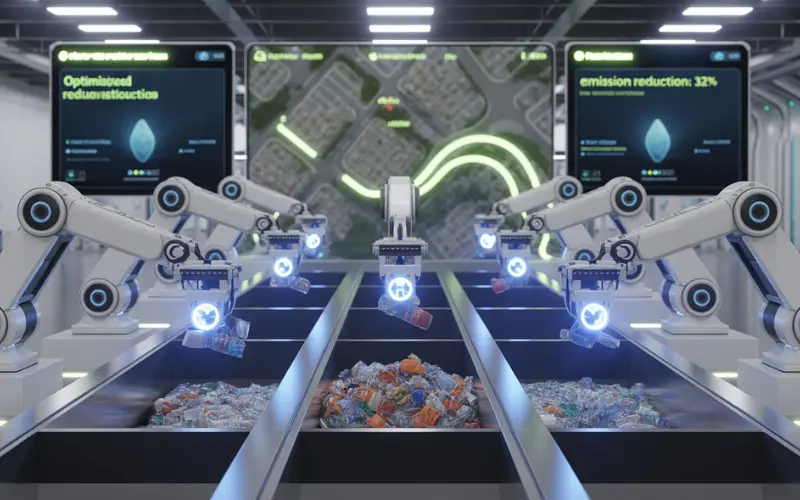
Waste Inventory and Recycling powered by AI tools can enhance efficiency and effectiveness in managing waste, showcasing the benefits of AI in environmental management and its ability to solve complex problems.Similarly, sustainable living depends on making proper use of the waste, and AI is also turning out to be a game changer in this area, demonstrating the impact of deep learning on the world as AI has also been used to analyze large amounts of data for better waste management.
Recycling can be enhanced by AI technologies; they can recognize and classify recyclable items more effectively with the help of machine learning algorithms and without human intervention, showcasing how AI is already transforming waste management practices. As an example, AI-based sorting systems powered by AI tools can be used to scan the contents of waste in real time, meaning that useful resources such as plastics and metals are not lost in landfill waste.
Therefore, AI can also assist municipalities to optimize the waste collection routes, which minimizes the use of fuel and other operational expenses, demonstrating how artificial intelligence is making a difference in urban management. Through data analysis of the trends of waste creation, AI can forecast when and where the waste is supposed to be collected, which results in the increased efficiency of the service provision, showcasing the benefits of AI in waste management.
This reduces the environmental cost of waste collection as well as improves the overall efficiency of the municipal services, highlighting the ways where AI can enhance urban living.
Sustainable Agriculture
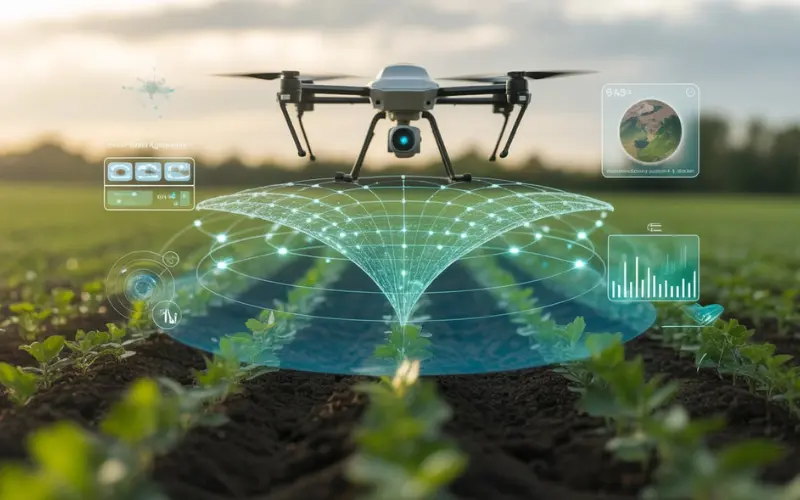
Sustainable Agriculture is increasingly being enhanced by AI, which allows farmers to make decisions that improve yield while minimizing environmental impact, demonstrating the benefits of AI in agriculture.Therefore, agriculture sector in which AI is striding a lot towards sustainability is agriculture, where AI has the potential to transform traditional farming practices through innovative AI development and help solve environmental challenges.
Use of AI in precision agriculture allows farmers to maximize use of resources, minimize waste, and maximize crop yields, exemplifying the ways artificial intelligence can improve efficiency through the ability of AI to analyze vast datasets. Artificial intelligence can process information, such as soil sensors, weather forecasts, and satellite images, to give farmers information on the ideal time to plant, irrigate, and harvest their crops.
Moreover, AI has the potential to decrease the pesticides and fertilizers, detecting pest attacks, and forecasting the demand of nutrients by taking into account the real-time data, demonstrating ways artificial intelligence can benefit agriculture.
This does not only reduce the burden of chemicals in the environment but also encourages healthy food production methods, making the world a better place with the help of AI models and human intelligence. Through AI, farmers will be able to use AI applications to be more productive with minimal impact on the environmental footprint, showcasing the potential of AI in agriculture and its positive impacts on sustainability.
Final Thought
Embracing AI technologies, including the benefits of artificial intelligence and the ethical considerations involved, can significantly contribute to making the world a better place for future generations.With the urgent issues of climate change and the lack of resources, AI becomes an effective companion in the process of achieving sustainable existence, showcasing the impact of data analytics on the world.
From maximizing energy consumption and transforming transportation to improving waste management and more sustainable agriculture.AI technologies, including AI in healthcare, are leading to a more sustainable future. Through the adoption of such innovations, individuals, businesses, and governments can collaborate with one another to make the world a healthier place to live in for the coming generations.
Implementing AI in our lives does not only help in making our lives sustainable but also enables us to make more knowledgeable judgments that will not only benefit the environment but also society, ultimately making the world a better place.
The possibilities of AI to enable sustainable living practices have no boundaries as we keep exploring and innovating with amounts of data, particularly in the realm of cyber security and data privacy, while also addressing the healthcare industry. With the help of AI power, we will be able to make big strides towards a better and fairer world, as artificial intelligence is making significant impacts in various sectors through innovative AI products.
Previous: Transforming HealthCare and Wellness with Artificial Intelligence